Automatic power management
Tracks loads and available energy, routes power to priority equipment and starts the generator only when needed.
Solar generation, battery storage and a backup generator in one unit. Software runs all three and starts the generator only when it has to.
Teams far from the power grid usually run on diesel generators. Generators are loud, give off heat and need constant refueling. That costs money, puts people at risk on fuel runs and makes a site easy to detect.
Built for military units, disaster response crews and remote sites.
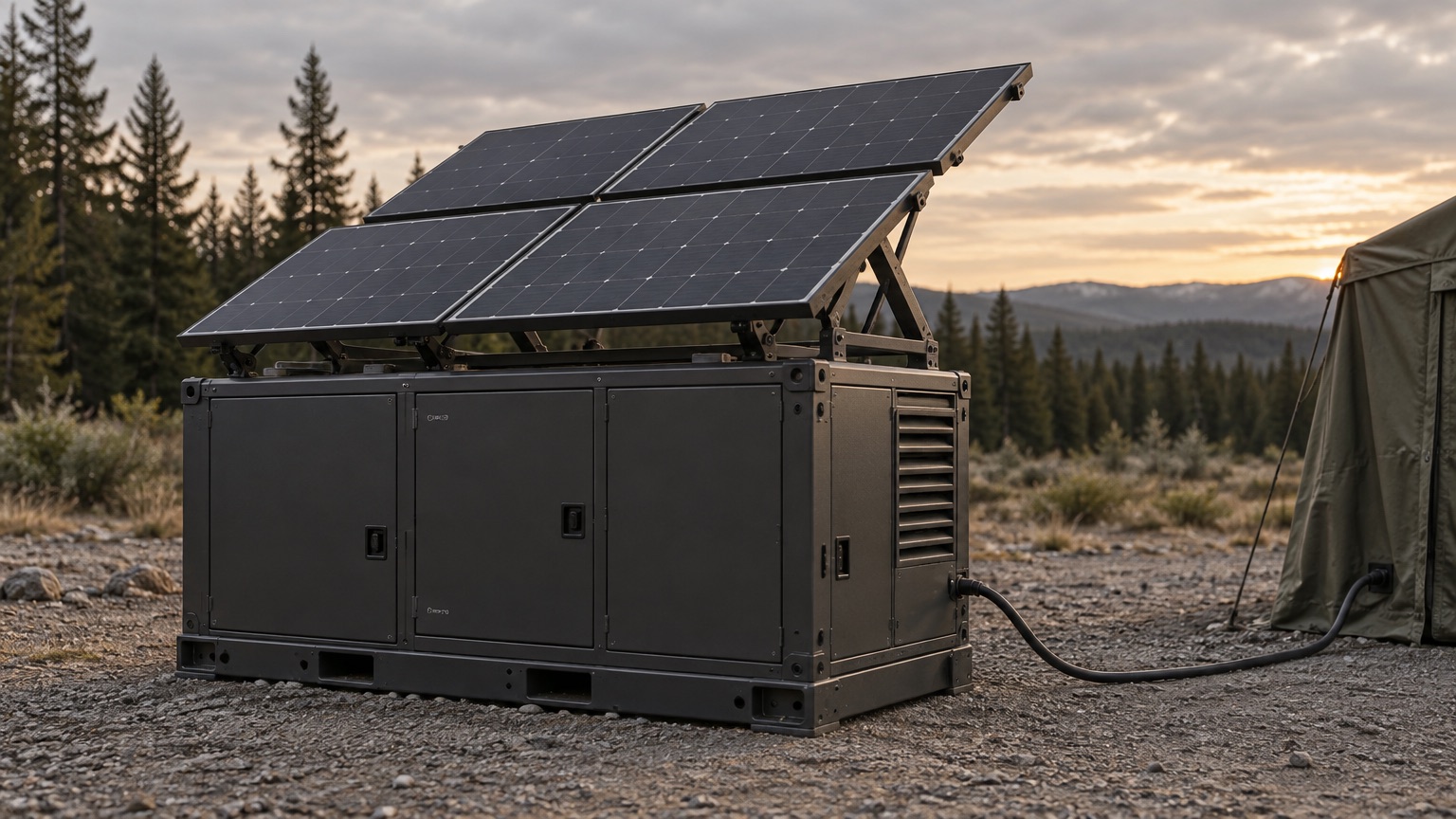
Each unit combines solar generation, battery storage and a backup generator. Software manages all three automatically.
The software tracks what power is being used and what is available, shifts power to the most important equipment, and runs the generator only when it has to.
Tracks loads and available energy, routes power to priority equipment and starts the generator only when needed.
Each unit draws on retractable solar and 30–60 kWh of battery storage before it burns fuel.
A unit sets up in minutes and needs no specialist to operate.
Units operate in temperatures down to −32 °C.
Quietfield Systems is based in Woodbridge, Connecticut.
Units are deployed in pilots and evaluation programs with military and government organizations, so a buyer can test working hardware in its own conditions.
Gene Frohman is a power-systems engineer with a career in military electrical power. He is a named inventor on a US patent for microgrid power distribution and on a US patent application for generator control, both from his work at Engineered Electric Company. His work spans tactical microgrids for fuel savings in the field, onboard power for HMMWV and MRAP vehicles, and test equipment for defense system integration.
Specifications describe the current unit, tested in pilots and evaluation programs. Performance in operational use may differ.